EUROPE - FRANCE
Audits and Studies
34
FRom one conTinenT To anoTHeR
Upon the request of the Interdepartmental
Syndicate for Sanitation of Greater Paris
(SIAAP), an educational audit was carried out
at the Downstream SeineWastewater Treat-
ment Plant (WWTP) from September 2015 to
February 2016.
The downstream Seine plant is being renova-
ted for increased performance and better
environmental protection.
This audit follows a first one that
IOWater
carried out in 2013-2014 with the workers
assigned to pretreatment at the plant.
This time,
nearly ahundredagents of the
biological production unit are concer-
ned.
As in 2013-2014, the audit took place pro-
gressively in stages, in close and continuing
consultationwith ”SIAAP” representatives.
This audit was deemed necessary so that the
agents couldoptimally operate thenew facili-
ties.
The audit shall lead to a training plan for
theseagents that includes variousmodules to
be implemented in the process, before the
workers operate the new facilities.
The conclusions of the first audit had been
particularlywell received.
This work on jobs and skills is crucial for an
organization like ”SIAAP” and for a plant as
huge as the downstream Seine one.
With this audit,
IOWater
is widening its
know-how and shows its capacity to help
water stakeholders in the management and
improvement of their skills.
4
”SIAAP”
Educational audit
Aerial view of the Downstream Seine
wastewater treatment plant
Energy
optimization
and audit
In 2014 and 2015,
IOWater
contributed
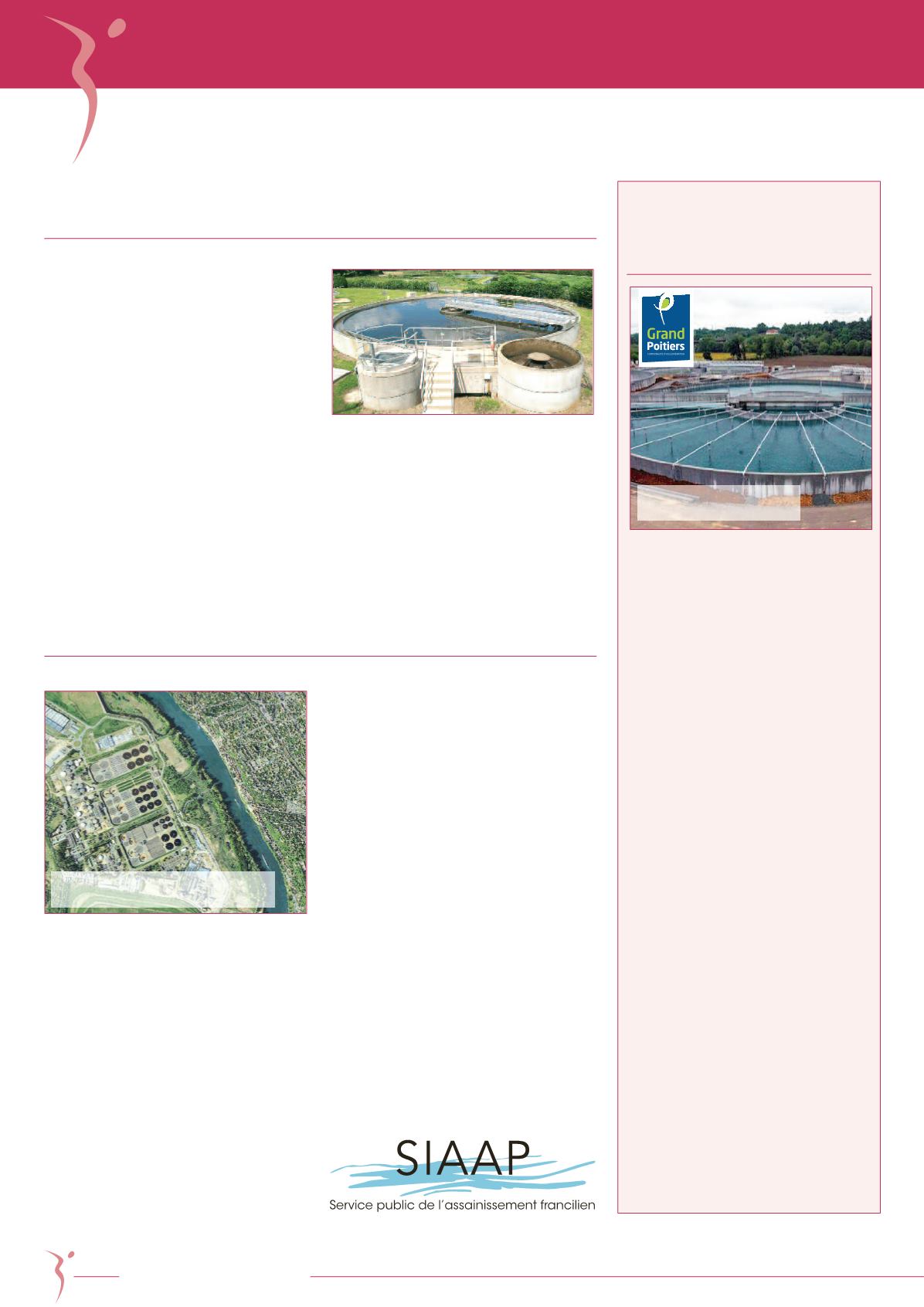
to a study on energy optimization of the
wastewater treatment plant of Poitiers (La
Folie), representing 160,000 pop.eq.
This studywas to analyze thewater treat-
ment process and seek for global ways to
optimize energy consumption. The techni-
cal datawereprovidedby theGreater Poi-
tiers Agglomeration.
Using energy consumptions and possibili-
ties for improvement of the processing
steps,
IOWater
proposed several scena-
rios and tracks for energy savings. Among
these, wemaymention:
l
Closermonitoringof energy consump-
tion and validation of energymeters;
l
Rational use of variable speed drives
on some equipment;
l
The possibility of reusing the sludge
produced by using digesters and pro-
ducing biogas.
The relevance of some solutions was stu-
died, such as the use of turbines or heat
recovery on the collectors or at thewaste-
water treatment plant.
This studywas presented by the
Greater
Poitiers Agglomeration
during a tech-
nical day organized by
IOWater,
whose
topic was
”Energy saving and pro-
duction in the water and sanitation
sector”.
4
As part of its Multi-Year Target Agreement
with ”ONEMA”,
IOWater
proposed an ap-
proach using performance indicators and
variables to help with the operational mana-
gement of community sanitation systems.
It means assessing the community sanitation
and wastewater treatment systems to define
actions for improving their operation and
management.
In a first step, a limited list of the most rele-
vant indicators and variableswas established
tomonitor the status of public sanitation and
wastewater treatment systems.
Then operating support tables were develo-
ped for the Service: one of them shows the
defects and / or major malfunctions that can
be identified by these indicators.
Another highlights the causes and conse-
quences ofmalfunction, anddefines themain
correctiveor preventive actions tomaintainor
restore performance at a good level.
With good indicators, integrated manage-
ment of community sanitation systems and
their patrimonial management can then be
dealt with in a pragmaticmanner.
4
Management of community
sanitation systems
Performance indicators
The “La Folie”wastewater
treatment plant
The News N° 26 -March 2016


